

Call us: +86 0518-87284110
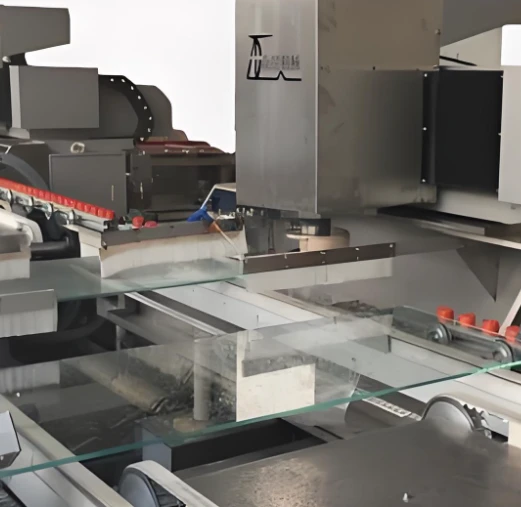

Selecting the right partner in the semiconductor quartz supply chain directly affects cost, lead time, and quality control. This guide offers a practical, repeatable method to determine whether a supplier is an actual manufacturer or a trading company, applicable across regions and platforms.
Website and Product Page Signals

- Production visibility
Manufacturers typically show factory-floor photos, production line videos, process flowcharts, and equipment lists. Look for machining, fusing, annealing, grinding, and polishing steps, as well as cleanroom scenes. - Product focus
Manufacturers usually specialize in a narrow set of quartz products with deep variants and detailed specifications. Very broad catalogs that span unrelated categories are more typical of trading companies. - Technical depth
Genuine producers describe processes, tolerances, surface quality, purity grades, annealing regimes, and inspection methods. Purely marketing language with minimal process detail points to trading.
Business Registration and Address Clues
- Scope of business
Registration that explicitly includes production, manufacturing, or processing is a positive signal. Descriptions limited to sales, distribution, or general import and export are typical of trading companies. - Address type
Factory addresses are commonly located in industrial parks or suburban manufacturing zones. Office towers and suite numbers usually indicate a commercial office used by traders. - Address consistency
Compare the registered address with the website, quotations, and business cards. Persistent mismatches between factory and office locations warrant further scrutiny.
Behavior on B2B Marketplaces
- Declared business type
Manufacturer versus trading labels can be informative but are not decisive. Treat them as a starting point, not proof. - Catalog shape
Manufacturers cluster around a few closely related quartz categories. Traders aggregate many disparate items from multiple upstream producers. - Third-party audits and certificates
On-platform factory audits, ISO certificates, and equipment photos with traceable details are strong signals of production capability. - Feedback pattern
Manufacturer feedback often mentions stable quality and predictable lead times. Complaints about inconsistent quality across items may indicate multi-source trading.
Pricing, MOQ, and Lead Times
- Price structure
Direct-from-factory pricing is usually more competitive, especially at higher volumes. Traders add a margin unless they leverage large bulk buys. - MOQ logic
Manufacturers may prefer higher MOQs for custom items to keep setups economical, though flexible plants can handle small lots. Very low or no MOQ for many different items often indicates trading. - Lead time control
Producers can discuss cycle time drivers, bottlenecks, furnace schedules, and exact processing durations. Vague or shifting lead times suggest dependence on third parties.
Technical Capability and Quality Assurance

- Engineering response
Manufacturers can interpret drawings, discuss tolerances, purity levels (e.g., 2–10 ppm metallic impurities or better for high-purity quartz), thermal shock limits, and finishing standards. Traders tend to relay messages rather than resolve technical questions directly. - Test reports and batch traceability
Producers can supply in-house or third-party reports for material composition, bubbles and inclusions, dimensional accuracy, and surface roughness, tied to batch numbers. - Equipment and capacity transparency
Look for named equipment models, count of CNC machines, lathes, hot forming stations, annealing furnaces, maximum workpiece sizes, and achievable tolerances.
Trade Shows and Capacity Disclosure
- Industry exhibitions
Manufacturers often exhibit at specialized semiconductor or materials shows and publish participation recaps, booth photos, and product updates. - Public capacity statements
Factory profiles that list plant area, headcount, monthly output, and typical delivery windows indicate direct production control.
A Step-By-Step Validation Workflow
- Desk research
Scan the website, product pages, and public profiles for factory evidence, technical depth, and catalog focus. - Registration check
Review business scope, company type, and address characteristics; confirm consistency across documents. - Capability interview
Ask engineering questions about tolerances, purity, annealing, and inspection. Request equipment lists and sample process flow. - Documentation request
Ask for recent test reports, ISO certificates, batch traceability examples, and a typical control plan for semiconductor parts. - Pilot order or sample
Place a small engineered sample with defined tolerances and acceptance criteria; assess responsiveness, documentation, and conformance. - Remote or onsite verification
Conduct a video walk-through of production and inspection areas or visit the site when feasible.
Quick Decision Checklist
- Factory imagery that matches company identity and address
- Narrow, deep product focus within semiconductor quartz
- Specific process details and equipment names
- Registration with manufacturing in scope and an industrial address
- Ability to read drawings and commit to tolerances and test plans
- Consistent, explainable lead times and clear capacity statements
Signals of trading include very broad catalogs, office-tower addresses, reliance on vague answers for technical questions, and inability to provide batch-linked reports.
Supplier Questionnaire Template
Use or adapt the following questions during supplier qualification.
- Company and facility
Year established, plant area, headcount, shift patterns, monthly capacity, main equipment list with models. - Materials and processes
Quartz grades used, typical impurity levels, annealing process, machining and polishing methods, achievable tolerances and surface finishes. - Quality assurance
Incoming material verification, in-process controls, final inspection methods, sample test reports for recent batches, calibration schedule for measurement tools. - Engineering and customization
CAD formats accepted, drawing review workflow, design for manufacturability feedback, prototype lead time, change control process. - Traceability and documentation
Batch coding, traveler sheets, retained samples, certificate of conformity content, ability to meet customer-specific documentation. - Logistics and service
Standard lead times by product type, peak season capacity management, packaging for fragile quartz, warranty and nonconformance handling.
Common Red Flags
- Stock photos without identifiable factory markers
- Inconsistent addresses across documents and web pages
- Inability to discuss tolerances, purity, or process limits
- Refusal or delays in providing batch-specific test reports
- Overly broad catalogs covering unrelated materials and products
- Lead times that change repeatedly without a process-based explanation
Manufacturer vs Trading Company Comparison
| Dimension | Manufacturer | Trading Company |
|---|---|---|
| Website signals | Factory photos, process details, equipment lists | Product-only pages, limited or generic process info |
| Catalog shape | Focused on semiconductor quartz with deep variants | Many disparate categories from multiple sources |
| Registration and address | Manufacturing in scope; industrial park or plant address | Sales, import, export scope; office tower address |
| Pricing and MOQ | More competitive at volume; MOQ aligned to setups | Often higher unit prices; low or no MOQ across items |
| Technical responses | Direct drawing review, tolerances, purity, QA plans | Relayed, generic, or delayed technical replies |
| QA and reports | Batch-linked test data and traceability | Limited access to upstream reports |
| Capacity and lead time | Disclosed equipment, output, and stable lead times | Capacity opaque; timelines depend on upstream |
How to Use This Guide
- During supplier sourcing, score each candidate across the dimensions above and require evidence for every claim.
- For strategic parts, combine document review with a pilot build and either a live video audit or an onsite visit.
- Reassess suppliers annually or after quality incidents to ensure signals still align with actual production control.
This structured approach reduces supplier risk, improves pricing and lead-time predictability, and strengthens quality assurance for semiconductor quartz parts.
 English
  Español
  Français
  Deutsch
  Русский
  العربية
  Português do Brasil
  日本語
日本語  한국어
한국어  繁體中文
繁體中文