

Call us: +86 0518-87284110

Raw Material Purity
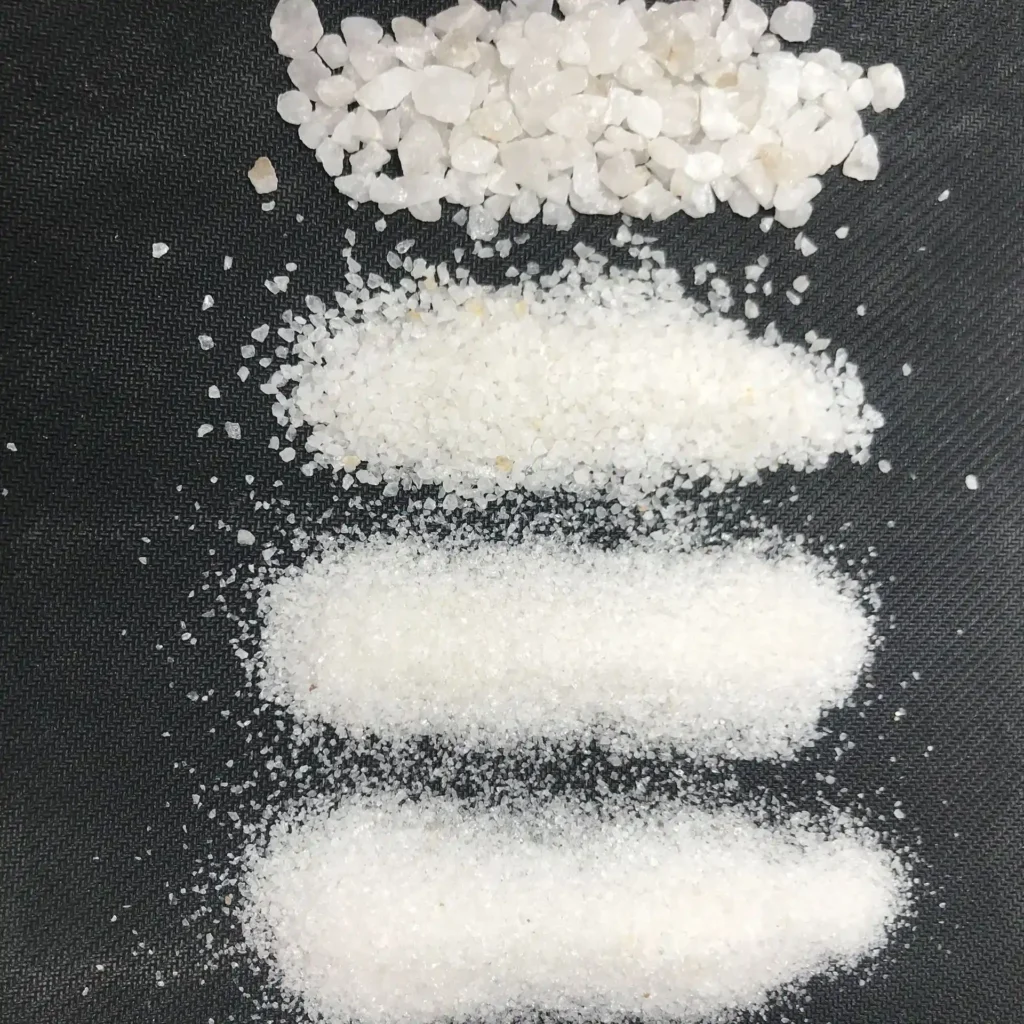
Semiconductor-grade quartz requires extremely high purity. The SiO₂ content typically exceeds 99.99%, and advanced applications may require 99.995% to 99.999% purity. Total metallic impurities must be kept at ppm or sub-ppm levels, especially alkali metals such as Na, K, and Li, which are strictly limited because they can diffuse during high-temperature processing and cause wafer contamination.
Standard fused quartz usually contains 99.5%–99.9% SiO₂, with tens to hundreds of ppm of impurities, which is acceptable for general industrial use but not for semiconductor processing.
Hydroxyl (OH) content is another key purity indicator. Semiconductor quartz often requires OH levels in the range of 5–50 ppm, depending on application temperature. Standard fused quartz, especially flame-fused material, can contain hundreds of ppm of OH, which reduces high-temperature stability and accelerates devitrification.
Manufacturing Processes
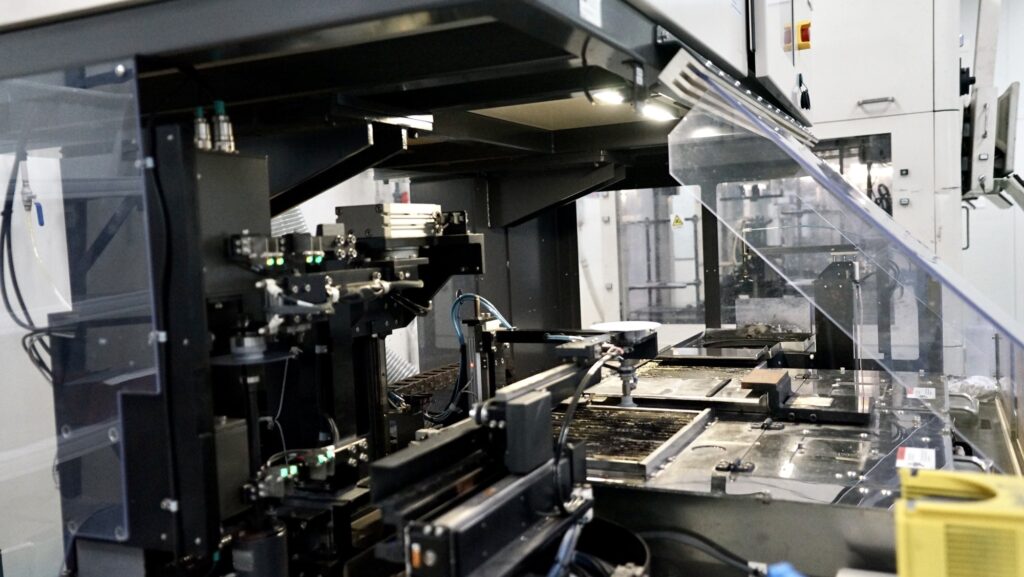
Semiconductor-grade quartz relies on ultra-pure raw materials and multi-step purification processes such as acid leaching, magnetic separation, thermal treatment, and advanced refining. Higher-end materials may be produced from synthetic precursors such as SiCl₄ to ensure extremely low impurity content and exceptional optical uniformity.
Electric-fusion is commonly used for semiconductor quartz because it minimizes contamination and produces low-OH material. Flame-fusion is more commonly used for standard quartz products, but it introduces higher OH levels and potential flame-related impurities.
After forming, semiconductor quartz typically undergoes additional treatments such as precision annealing, high-temperature dehydroxylation, and ultra-clean processing to minimize internal stress and surface contamination. Standard fused quartz products generally receive only basic annealing and cleaning.
Physical Properties
Thermal Properties
Both materials share the inherently low thermal expansion of fused silica, enabling excellent thermal shock resistance. However, semiconductor-grade quartz demonstrates greater stability in prolonged high-temperature cycles due to its lower impurity and OH content. Standard quartz is more prone to deformation and devitrification when exposed to repeated high-temperature conditions.
Mechanical Strength
Mechanical strength in quartz is heavily influenced by internal defects such as bubbles and inclusions. Semiconductor quartz imposes strict limits on bubble size and density, ensuring higher reliability under thermal and mechanical stress. Standard quartz allows more internal defects, which is acceptable for general applications but unsuitable for semiconductor environments.
Optical Transmission
High-purity quartz offers superior transmission from deep ultraviolet to infrared wavelengths. Standard fused quartz exhibits increased absorption in the UV range due to metallic impurities and reduced infrared transparency due to high OH content. Semiconductor optical applications, such as photolithography mask substrates, require the exceptional optical uniformity achievable only with ultra-high-purity quartz.
Electrical Properties
Both materials are excellent electrical insulators. Semiconductor-grade quartz maintains lower dielectric loss and more stable dielectric properties at high frequencies and high temperatures due to its extremely low impurity content.
Chemical Properties
Quartz is highly resistant to most acids except hydrofluoric acid. It also exhibits good resistance to most gases and reactive environments used in semiconductor processing.
Semiconductor quartz offers additional advantages: very low impurity content means negligible leaching, minimal outgassing in vacuum systems, and better chemical stability in plasma environments. Standard quartz tends to absorb more moisture due to higher surface hydroxyl content and may release contaminants during heating, which is unacceptable in semiconductor equipment.
Application Differences
Semiconductor-grade quartz is used throughout wafer manufacturing, including diffusion furnace tubes, quartz boats, liners, CVD reactor components, plasma etching parts, and high-purity piping. High-purity quartz crucibles are essential for growing monocrystalline silicon, and their purity directly affects crystal quality.
Ultra-pure synthetic quartz is also required for optical components in photolithography systems.
Standard fused quartz is widely used in laboratory ware, lighting, UV lamps, heating tubes, optical windows, and industrial applications where high temperature and chemical stability are required but ultra-low impurity levels are unnecessary.
Price and Supply Chain Factors

Semiconductor-grade quartz is significantly more expensive due to raw material scarcity, complex purification processes, and high production costs. The supply of high-purity quartz is dominated by a few global producers, and suitable natural deposits are extremely rare. Market demand from semiconductor and photovoltaic industries also contributes to persistent price pressure.
Standard fused quartz relies on abundant quartz sand resources and mature manufacturing technologies, resulting in stable supply and low cost.
 English
  Español
  Français
  Deutsch
  Русский
  العربية
  Português do Brasil
  日本語
日本語  한국어
한국어  繁體中文
繁體中文